

The Invitational Identity
Summary from the January 4th Three Sundays Session

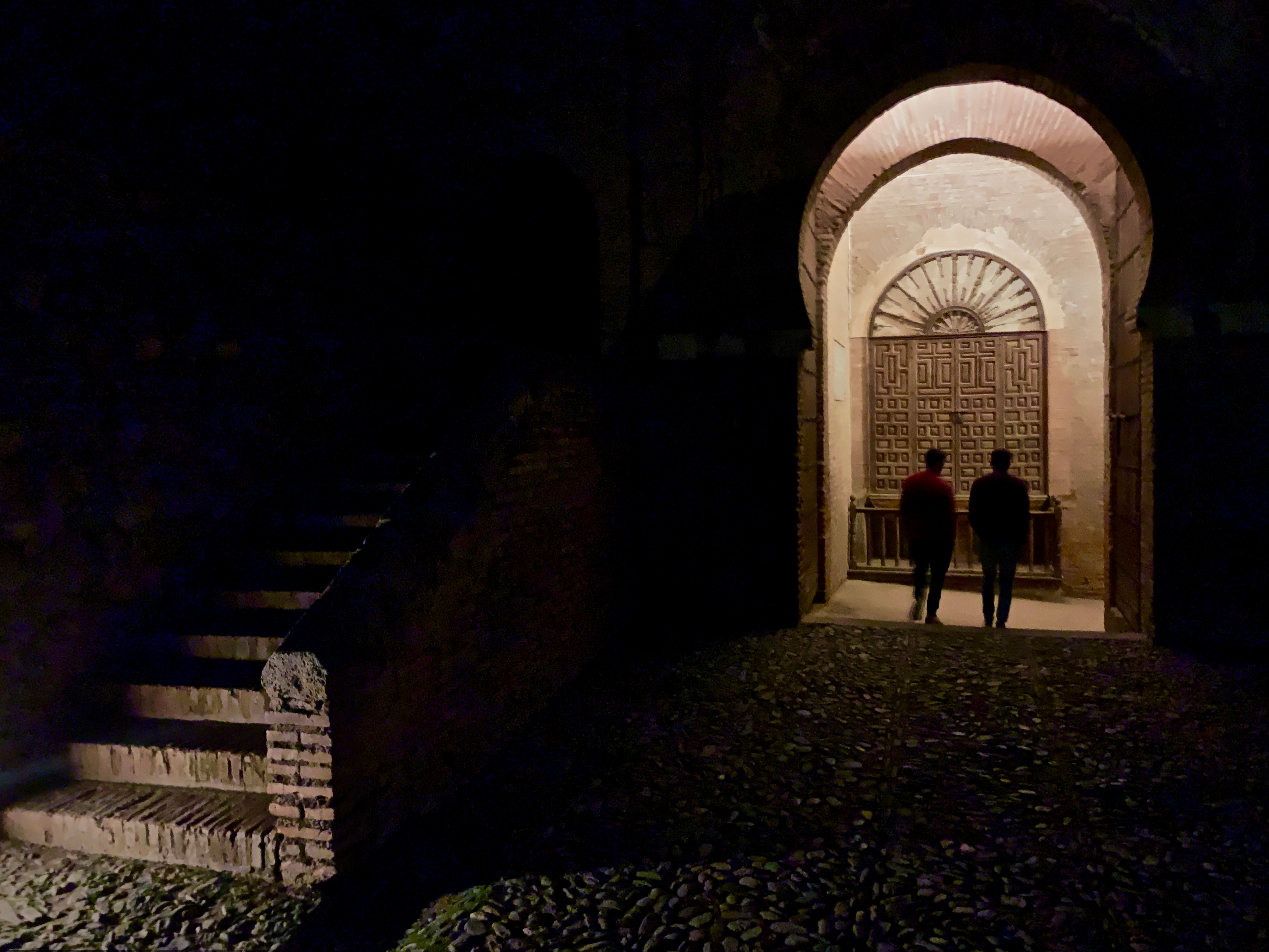
Quite often we feel that inner horizon beneath which our sense of surety lies, not as an invitation, but as a barrier of discomfort and resistance. Beneath that resistance is an urgency that threatens to break apart our quotidian, everyday and sometimes rather boring life on the surface.
Session recordings and summaries for the January 2026 series, The Invitational Identity are available to all registered attendees until May 1st, 2026.
The March Series, The Cost of Love begins Sunday, March 15th.
The Invitational Identity:
The Art and Practice of Shaping a Beautiful Mind
Session 1 Summary
We human beings have always had to live our lives amidst the difficulties, griefs, and foolishness of the world, and still find a place to step onto, and a place to step from, at all the crucial thresholds of our lives. Quite often the step we have to make is hidden from us: what is inviting us – and what we are inviting towards ourselves – is not yet illuminated. In that hidden step, and in our hearts and minds as we take it, lies the beginning of an understanding of the mystery of faith: the understanding that we somehow belong to enormous horizons in our lives that are calling us but that we have not yet reached. Many of those horizons will only be reached through difficulty and loss.
I am recording this first Sunday from the island of Kauai. I arrived just yesterday on the island, both to renew a friendship with and to record a conversation with creative producer, Rick Rubin. Just last night, as we arrived, someone here on the property had lost their mother, they received the news literally as we came through the gate. So I arrived in the midst of the shock of loss and mourning, but also it seems, in the midst of that kind of joyous magic that can gather around the death of someone who has lived a very, very good life.
Every day and every moment has its own invitations, some of them absolute shocks to the system, but often bring new perspectives and new appreciations if we are big enough and generous enough to meet them. Who knows what lies ahead for all of us in this coming year? All of us will have our equal measures of light and shade. Some of us will pass through very difficult depths of shadow and challenge. One thing is sure; the ability to invite the right kind of help for ourselves as we move through our traumas and triumphs, our joys and our unexpected victories, becomes essential.
Early this morning I was speaking with the daughter who had lost her mother. I told her about the cycles of visitation I experienced from my own mother after I lost her. To begin with, there is a very real sense of astonishment, a sense of walking with them and, most especially, walking with your own grief while also letting go. The whole experience creates another form of intimacy with the person you have lost, even as you are giving them away.
Then come periods, after a few years perhaps, when you may not think of them for long stretches at a time. But in difficult times in your life, you may find yourself returning to their side and asking for their help. Recently, I went through a most extraordinarily painful but necessary time and found myself asking for my mother’s help in a very powerful way.
Who knows who we are asking for help—whether we are asking for help from an actual spirit who knows what we are inviting in, or whether we are inviting in that profound part of them that still lives in us, and always will, because they were such a foundational part of our lives. Almost always, as the years go by, there occurs a kind of blurring between what you think is other than you, and what you think is you.
We are all waking into a new life, every day of our life and I want to work with the theme of the invitational identity: what you bring towards yourself, but also, what quite scarily at times, is inviting you. Very often the invitation is one toward a more courageous centre and foundation inside yourself than the not so courageous part of you that holds the daily conversation of your life.
To address the creative, courageous centre directly, I will begin with this waking-up poem; as we all, in a way, wake into this new life, this new year. The poem is called “What to Remember When Waking” and reflects the first discipline I want to work with: the understanding that something quite extraordinary occurs underneath our conscious actions and in a very remarkable, but hidden way, in our sleep.
We are all learning how much our identity, our health, and the way we learn – both practically and psychologically – is dependent upon good and deep sleep. Last night, in fact, I dreamt I was preparing to give a talk and was setting up the microphone when I suddenly realised I needed to change my shirt before I went on stage. I tried to get back to my room – it seemed to be in some kind of old university building, probably Cambridge University – and I was in Room 60. But I couldn’t find Room 60. The number had disappeared. I was asking for help, asking where Room 60 was, and everyone was trying to help, saying, “That’s strange – I thought Room 60 was here too.” When I woke up, I stayed with that image. I never did find Room 60, and luckily, I woke up before I had to give the talk. There is something in that powerful representation. I am past the age of sixty, but there is something about that number – 60 minutes in an hour: perhaps pointing to cometh the hour, cometh the man. There is so much it is trying to say to me.
Quite often, whether we can remember a dream or not, there is a kind of physical tonality that we wake up with in the morning – something that invites us into a deeper way of being in the world. It is more than worthwhile, it is a form of treasure – to stay with those moments. There are times, of course, when you cannot. If you have young children running into your bedroom, bouncing on the bed, hungry and ready for the day, you do not have time for considering a dream. There are seasons of life in which you do not have the luxury to linger in the revelations that float up like cargo from the deep river of rest inside you. But if you do have the time, it is a very powerful way to open the day to something both new and renewing itself inside you.
I wrote this piece to celebrate that opening, but also to remind myself of the discipline necessary to stay with the revelation no matter how opaque it might be. As a way of remembering I have often woken up and recited this piece to myself immediately.
What to Remember When Waking
In that first
hardly noticed
moment
in which you wake,
coming back
to this life
from the other
more secret,
moveable
and frighteningly
honest
world
where everything
began,
there is a small
opening
into the day
that closes
the moment
you begin
your plans.

What you can plan
is too small
for you to live.

What you can live
wholeheartedly
will make plans
enough for the vitality
hidden in your sleep.

To be human
is to become visible
while carrying
what is hidden
as a gift to others.

To remember
the other world
in this world
is to live in your
true inheritance.

You are not
a troubled guest
on this earth,
you are not
an accident
amidst other accidents,
you were invited
from another and greater
night than the one
from which
you have just emerged.

Now, looking through
the slanting light
of the morning window
toward the mountain presence
of everything that can be,
what urgency
calls you
to your one love?

What shape
waits in the seed of you
to grow and spread
its branches
against a future sky?

Is it waiting
in the fertile sea?
In the trees
beyond the house?
In the life
you can imagine
for yourself?

In the open
and lovely
white page
on the waiting desk?


-from The House of Belonging
Sometimes the imagery of our dream life – or, as I say, that very physical body tonality we wake up with in the morning – can be so uncomfortable or so frightening that we will not turn our face towards it. We refuse to investigate it. We are relieved instead to get up to our coffee, to go through the motions of making our breakfast, of beginning the day, and placing ourselves back into a more comfortable environment full of our familiar motions. But there is a deep practice in turning your face towards whatever has been given to you in the night, whatever difficulties you are being handed, regarding interpretation.
